When installing asphalt roof shingles, the method used can have a major impact on the lifespan and performance of the roof. While most homeowners focus on the type of shingle being installed, the installation technique itself is just as important.
One installation method that is widely discouraged by manufacturers and experienced roofers is called “racking.” Although it may appear to save time during installation, racking can lead to a variety of problems that may cause premature shingle failure, reduced wind resistance, and costly repairs down the road.
Understanding why racking is problematic helps homeowners and property managers ensure their roofs are installed correctly from the start.
What Is Racking?
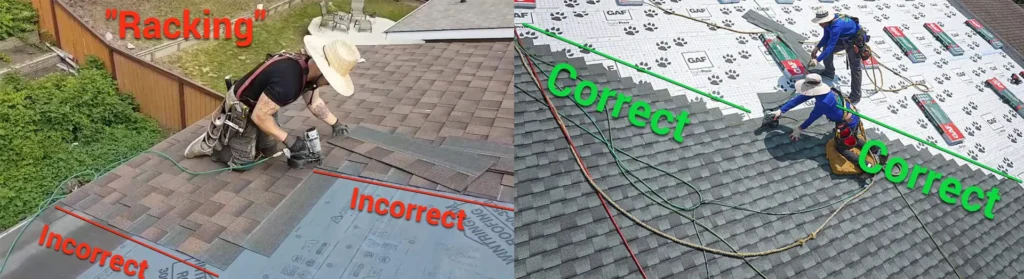
Racking is a shingle installation method where shingles are installed vertically up the roof in a straight column rather than using the traditional stair-step or diagonal pattern. Installers will complete one vertical section of the roof at a time, stacking shingles directly above one another before moving to the next column.
At first glance, this method can seem efficient. It allows roofers to work quickly without constantly repositioning themselves across the roof. For inexperienced crews or rushed jobs, this can be appealing.
However, roofing is not an area where speed should come at the expense of proper technique. The way shingles are designed and manufactured assumes a specific installation pattern, and deviating from that pattern can create long-term issues.
Why Racking Causes Problems
1. Increased Risk of Shingle Bending and Stress
Asphalt shingles are engineered to be installed in a staggered pattern that distributes tension evenly across the roof surface. When shingles are installed using the racking method, they are often bent or forced into alignment in ways that were not intended by the manufacturer.
This can introduce internal stress into the shingle, particularly along the adhesive seal lines. Over time, these stress points can weaken the material and lead to cracking, curling, or premature deterioration.
In climates with temperature fluctuations, such as freeze-thaw cycles, this added stress can accelerate wear even further.
2. Poor Seal Alignment
Modern asphalt shingles rely on self-sealing adhesive strips that activate with heat from the sun. These seal strips are critical for locking shingles together and preventing wind uplift.
When shingles are installed properly in a staggered pattern, these seal strips align consistently with the shingles above them. However, racking can disrupt this alignment.
If the seal strips do not line up correctly, the shingles may not bond as intended. This can leave sections of the roof vulnerable to strong winds, increasing the risk of shingles lifting, tearing, or blowing off entirely.
3. Reduced Wind Resistance
Because of the seal alignment issues and uneven stress distribution, racked shingles often do not perform as well in high-wind conditions.
Properly installed shingles create a layered system that resists wind uplift by distributing force across multiple overlapping rows. Racking disrupts this system, making certain areas of the roof more susceptible to failure.
In regions that experience strong winds or storms, this can significantly shorten the lifespan of the roof.
4. Visible Pattern and Aesthetic Issues
Racking can also create noticeable vertical lines or patterns across the roof. These lines occur because the shingles are aligned in columns rather than staggered rows.
While this may not seem like a major concern at first, it can negatively affect curb appeal. The uniform, staggered look of a properly installed roof is one of the reasons architectural shingles are so popular.
Over time, these vertical lines can become even more pronounced as certain sections of the roof age differently than others.
5. Manufacturer Warranty Concerns
Most shingle manufacturers provide detailed installation guidelines that must be followed in order for the warranty to remain valid. These guidelines typically specify the correct installation pattern.
In many cases, racking is either discouraged or explicitly not recommended. If a roof fails and the manufacturer determines that the shingles were installed using an improper method, the warranty claim may be denied.
This means the homeowner could be responsible for the full cost of repairs or replacement, even if the shingles themselves were still within the warranty period.
The Better Approach: Stair-Step Installation
The recommended installation method for most asphalt shingles is the stair-step or diagonal pattern. This approach staggers the joints between shingles, ensuring that no vertical seams line up across the roof.
This method provides several important benefits:
- Even distribution of stress across the roof surface
- Proper alignment of adhesive seal strips
- Improved wind resistance
- A clean, uniform appearance
Although it may take slightly longer to install, the stair-step method ensures the roofing system performs as intended and lasts as long as possible.
Why Proper Installation Matters
A roof is a system, not just a layer of shingles. Every component—from underlayment to flashing to shingle placement—works together to protect the home.
Even high-quality shingles can fail prematurely if they are installed incorrectly. This is why choosing a knowledgeable and experienced contractor is just as important as selecting the right materials.
Homeowners should not hesitate to ask contractors about their installation methods and whether they follow manufacturer guidelines.
What Should Homeowners Do?
While racking may seem like a faster way to install shingles, it often sacrifices long-term durability for short-term convenience. The risks include improper sealing, increased shingle stress, reduced wind resistance, aesthetic issues, and potential warranty problems.
For homeowners, the key takeaway is simple: a roof is only as good as its installation. Ensuring your contractor follows proven, manufacturer-approved methods can make the difference between a roof that lasts decades and one that fails far too soon.