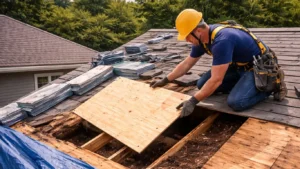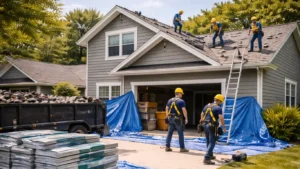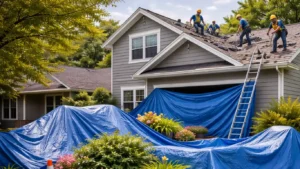
During a roof replacement, contractors remove the old shingles and roofing materials to expose the underlying roof deck. In many homes, the decking is still solid and ready for the new roof system. However, sometimes hidden damage is discovered once the old materials are removed.
This situation is more common than many homeowners realize. Understanding what roof decking damage means and how it is handled can help reduce stress if it comes up during your roofing project.
What Is Roof Decking?
Roof decking (sometimes called roof sheathing) is the structural surface that sits between the framing of your home and the roofing materials above it.
Most modern homes use plywood or oriented strand board (OSB) sheets attached to the roof trusses. Shingles, underlayment, and other roofing components are installed directly on top of this surface.
Because the decking forms the foundation of the entire roofing system, it must be strong and stable before a new roof can be installed.
Why Decking Damage Is Sometimes Hidden
Many types of roof damage occur slowly over time and may not be visible from the outside.
For example, a small roof leak can allow moisture to enter the roofing system and gradually weaken the wood underneath. Because shingles and underlayment cover the decking, this damage often remains hidden until the roof is removed.
This is why decking issues are usually discovered during the tear-off stage of a roof replacement.
Common Signs of Damaged Roof Decking
Roofers inspect the decking once the old materials are removed. They look for several warning signs that indicate structural problems.
- Soft or spongy areas when walked on
- Wood rot caused by moisture exposure
- Dark staining or mold growth
- Cracked or broken wood panels
- Sections that sag between rafters
If any of these conditions are present, those sections of decking must be repaired before the new roofing system can be installed.
How Roofers Repair Damaged Decking
When damaged areas are found, the solution is typically straightforward. Roofers remove the affected sections of wood and replace them with new decking panels.
The repair process generally involves:
- Cutting out the damaged portion of the decking
- Inspecting the framing underneath
- Installing new plywood or OSB panels
- Securing the new decking to roof framing
Once the repair is completed, the roofing installation continues as planned.
Will This Delay the Project?
In most cases, replacing sections of roof decking adds only a small amount of additional time to the project. Experienced roofing crews carry materials and tools needed to handle these repairs during installation.
For many homes, decking replacement can be completed the same day without significantly impacting the schedule.
How Decking Repairs Affect Roofing Costs
Decking repairs are usually not included in the base roofing quote because the condition of the wood cannot be confirmed until the roof is opened.
Instead, most roofing contractors list decking replacement as a potential additional cost measured per sheet of plywood or OSB.
This approach ensures homeowners only pay for repairs if they are actually needed.
Why Decking Repairs Protect Your New Roof
Although discovering damaged decking can feel like an unexpected complication, addressing the issue is essential for the long-term performance of your roof.
Installing new shingles over weakened decking would compromise the entire roofing system. By repairing the foundation first, roofers ensure your new roof is installed on a stable and reliable structure.
A Normal Part of the Roofing Process
Finding small sections of damaged decking during a roof replacement is not unusual, especially in older homes or roofs that have experienced past leaks.
Professional roofing crews are trained to identify these issues and repair them quickly so the new roofing system can be installed safely and correctly.
When handled properly, decking repairs simply become another step in ensuring your roof performs well for many years to come.