When homeowners invest in a new roof, one of the most important protections that comes with the project is the warranty. Roofing warranties are designed to protect against certain defects or issues, but they can also be confusing if you are unfamiliar with how they work.
Understanding the different types of roofing warranties — and what they actually cover — can help homeowners make better decisions when choosing materials and contractors.
Two Main Types of Roofing Warranties
Most roofing systems come with two different warranties that cover different aspects of the project.
These include:
- Manufacturer warranties for roofing materials
- Workmanship warranties provided by the contractor
Both warranties play an important role in protecting your roof over time.
Manufacturer Material Warranties
Material warranties are provided by the roofing manufacturer and cover defects in the roofing products themselves.
If the shingles fail due to a manufacturing issue rather than installation or aging, the manufacturer may provide replacement materials under the terms of the warranty.
Typical material warranties for asphalt shingles can range from:
- 20 to 30 years for standard shingles
- 30 to 50 years for architectural shingles
- Lifetime warranties for certain premium products
However, it’s important to understand that these warranties often include specific limitations and conditions.
What Material Warranties Usually Cover
Manufacturer warranties generally cover defects that occur during the manufacturing process.
Examples may include:
- Premature shingle cracking
- Excessive granule loss due to manufacturing defects
- Material failure unrelated to installation
If these issues occur within the warranty period, the manufacturer may provide replacement materials or compensation based on the warranty terms.
What Material Warranties Usually Do NOT Cover
Most roofing warranties do not cover damage caused by factors outside of the material itself.
This can include:
- Improper installation
- Storm damage or extreme weather
- Normal aging and wear
- Poor attic ventilation
- Structural movement of the home
This is why professional installation and proper ventilation are critical for protecting the roof system.
Contractor Workmanship Warranties
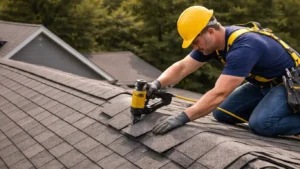
While manufacturers cover the materials, roofing contractors usually provide a separate warranty covering their installation work.
A workmanship warranty protects homeowners if problems occur due to installation mistakes.
Examples may include:
- Incorrect shingle installation
- Improper flashing installation
- Poor sealing around roof penetrations
- Installation errors that cause leaks
The length of workmanship warranties varies by contractor, but they commonly range from 5 to 10 years.
Extended Manufacturer Warranties
Some manufacturers offer enhanced or extended warranties when their roofing systems are installed by certified contractors.
These extended warranties may provide additional protection such as:
- Longer coverage periods
- Improved non-prorated protection
- Coverage for both materials and labor
These programs often require the contractor to install a complete roofing system using approved components.
Why Proper Installation Matters
Even the highest quality roofing materials can fail if they are installed incorrectly.
This is why choosing an experienced contractor is just as important as selecting the right shingles. A well-installed roofing system ensures the warranty protections remain valid and the roof performs as intended.
Reading the Warranty Details
Before approving a roofing project, homeowners should review the warranty documentation to understand what is included.
Key details to look for include:
- Coverage length
- What events are covered
- Prorated vs non-prorated coverage
- Transferability if the home is sold
Taking the time to understand these details can prevent surprises later.
Warranties Provide Long-Term Peace of Mind
Roofing warranties help protect one of the most important parts of your home. While no warranty covers every possible situation, strong material and workmanship coverage can provide valuable peace of mind.
By understanding how roofing warranties work, homeowners can confidently invest in a roof that will protect their home for decades.