Asphalt shingles are the most commonly used roofing material for residential homes in North America. They are widely chosen because they are affordable, durable, and available in many colors and styles.
However, not all asphalt shingles are the same. Manufacturers produce several different types of shingles, each designed with different features, lifespans, and price points. Understanding these differences can help homeowners choose the right roofing material when replacing their roof.
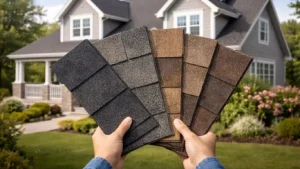
Most asphalt shingles fall into three main categories: 3-tab shingles, architectural shingles, and premium or luxury shingles.
What Asphalt Shingles Are Made Of
Before looking at the different types, it helps to understand how asphalt shingles are constructed.
Most modern shingles are made using a fiberglass base mat that is coated with asphalt. This asphalt layer provides waterproofing and flexibility. The surface of the shingle is then covered with mineral granules that protect the asphalt from ultraviolet sunlight and weather exposure.
This layered construction creates a roofing material that is lightweight, relatively durable, and capable of protecting homes from rain, snow, and wind.
3-Tab Asphalt Shingles
3-tab shingles are the most basic and traditional type of asphalt roofing shingle. They get their name from the three evenly spaced tabs cut along the lower edge of each shingle strip.
When installed, these tabs create a uniform, flat appearance across the roof.
Advantages of 3-Tab Shingles
- Lower material cost compared to other shingle types
- Lightweight and easy to install
- Clean, consistent appearance
Limitations of 3-Tab Shingles
- Shorter lifespan compared to thicker shingles
- Lower wind resistance
- Less dimensional appearance
- Difficult to source the right style/color as these are being phased out.
Because of their lower cost, 3-tab shingles are sometimes used on rental properties or budget-conscious roofing projects.
Architectural Shingles
Architectural shingles, also called dimensional shingles or laminate shingles, are currently the most popular asphalt roofing option for residential homes.
Unlike 3-tab shingles, architectural shingles are built with multiple layers of material laminated together. This thicker construction creates a dimensional appearance that resembles wood shakes or other premium roofing materials.
Advantages of Architectural Shingles
- Thicker and more durable construction
- Improved wind resistance
- Longer lifespan than basic shingles
- More visually textured appearance
Because of these benefits, architectural shingles are commonly chosen for roof replacements on modern homes.
Limitations of Architectural Shingles
- Higher cost than 3-tab shingles
- Slightly heavier material weight
Despite the slightly higher cost, many homeowners consider architectural shingles a good balance between durability and affordability.
Luxury or Premium Asphalt Shingles
Luxury shingles represent the highest tier of asphalt roofing products. These shingles are designed to replicate the appearance of premium materials such as slate or cedar shake roofing.
They are typically thicker and heavier than both 3-tab and architectural shingles.
Advantages of Premium Shingles
- High-end appearance that mimics slate or wood shake
- Excellent durability
- Strong wind resistance
Limitations of Premium Shingles
- Higher material cost
- Heavier roofing system
Luxury shingles are often chosen for homes where aesthetics and curb appeal are major priorities.
Choosing the Right Asphalt Shingle
When selecting asphalt shingles, homeowners often consider several factors.
Budget
3-tab shingles usually have the lowest upfront cost, while architectural and luxury shingles cost more but may provide longer lifespan and improved durability.
Durability
Thicker shingles generally perform better in strong winds and harsh weather conditions.
Appearance
Architectural and luxury shingles provide a more dimensional look that many homeowners prefer over the flat appearance of 3-tab shingles.
Roof Structure
Heavier shingles may require additional structural consideration, especially when replacing an existing roof.
A roofing professional can help evaluate these factors and recommend the most suitable shingle type for a specific home.
Lifespan Expectations
The lifespan of asphalt shingles varies depending on the type of shingle, installation quality, climate conditions, and roof maintenance.
In general:
- 3-tab shingles typically last around 20–25 years
- Architectural shingles often last 25–30 years
- Premium shingles may last longer depending on conditions
Regular maintenance and proper attic ventilation can help extend the life of any roofing system.