Gutters are a critical part of your home’s drainage system. Their primary job is to collect rainwater from the roof and direct it safely away from the foundation.
When gutters function properly, they help protect your home from water damage. However, when they begin to fail or deteriorate, water may start overflowing or draining in the wrong places.
Over time, damaged gutters can lead to problems such as:
- Roof edge leaks
- Foundation moisture issues
- Siding damage
- Landscape erosion
- Basement water intrusion
Recognizing the early signs of gutter problems allows homeowners to repair or replace the system before larger issues develop.
Gutters Pulling Away From the Roofline
One of the most noticeable signs of gutter trouble is when sections begin pulling away from the fascia along the roof edge.
This often happens when the fasteners or brackets holding the gutters in place loosen over time.
Heavy debris buildup, snow load, or ice accumulation can also place extra stress on the gutter system.
When gutters begin separating from the roofline, water may start spilling behind the gutter instead of flowing through it.
This can allow water to reach the fascia boards or siding, potentially causing long-term structural damage.
Visible Cracks or Holes
Small cracks or holes in gutters may not seem like a major concern at first, but they can quickly grow worse if left unaddressed.
Water escaping through these openings can drip along the siding or pool around the home’s foundation.
Metal gutters may eventually develop rust in these areas, while older plastic systems can become brittle and crack.
Minor cracks can sometimes be repaired with sealants, but widespread damage may require replacing the affected sections.
Water Overflowing During Rainstorms
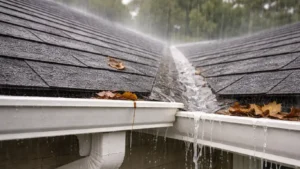
If water spills over the sides of your gutters during rain, it’s a sign that the system may not be functioning properly.
This could be caused by:
- Clogged gutters filled with debris
- Improper gutter slope
- Downspouts blocked by leaves or dirt
- Gutters that are too small for the roof area
While a simple cleaning may resolve the problem in some cases, persistent overflow may indicate that the gutter system needs adjustment or replacement.
Sagging Sections of Gutter
Gutters should follow a consistent line along the roof edge.
If you notice sections of gutter sagging or dipping downward, this may indicate structural problems with the system.
Sagging can occur when brackets fail, fasteners loosen, or debris accumulation becomes too heavy.
When gutters sag, water may collect in those low points instead of flowing toward the downspouts.
This standing water can accelerate deterioration and increase the risk of leaks.
Peeling Paint or Water Stains on Siding
Exterior signs of gutter failure sometimes appear on the siding rather than the gutter itself.
Water that spills over damaged or clogged gutters can run down the exterior walls of the home.
This may cause:
- Peeling paint
- Water stains
- Mildew growth
- Discolouration along the siding
If these symptoms appear near the roofline or below gutter sections, it may indicate that water is escaping the gutter system.
Pooling Water Around the Foundation
Downspouts are responsible for directing water away from the base of the home.
If gutters or downspouts fail, rainwater may collect around the foundation instead.
Over time, excess moisture near the foundation can contribute to basement leaks, soil erosion, or structural settling.
If you notice puddles forming near the base of your home after rainfall, it may be worth inspecting the gutter system to ensure it is draining properly.
Gutters That Are Simply Old
Even well-maintained gutter systems eventually reach the end of their lifespan.
Most aluminum gutter systems can last around 20 years, depending on environmental conditions and maintenance.
If your gutters are approaching this age and showing multiple signs of wear, replacing them may be more cost-effective than continuing repairs.
Newer gutter systems can improve drainage performance and reduce the likelihood of future maintenance issues.