Choosing the right roof shingle colour is one of the most important design decisions homeowners make during a roof replacement. While shingles are primarily installed to protect a home from the elements, they also have a major impact on curb appeal and the overall appearance of a house.
Because a roof typically covers a large portion of a home’s visible exterior, the colour you choose will influence how the entire property looks from the street.
Understanding how roof colours interact with siding, trim, architectural style, and lighting conditions can help homeowners choose a shingle colour that enhances their home rather than overpowering it.
Why Roof Colour Matters
A roof can represent nearly half of a home’s visible exterior. Because of this, the colour of your shingles plays a major role in the overall appearance of the property.
The right colour can enhance curb appeal and complement other exterior elements. The wrong choice may clash with siding, brick, or landscaping.
Unlike paint, roofing materials are not easy to change. Most asphalt shingle roofs last decades, which makes it important to choose a colour that will remain visually appealing for many years.
Consider Your Home’s Exterior Materials
The first step in choosing a roof colour is evaluating the existing materials on your home’s exterior.
Roof shingles should complement the home’s siding, brick, stone, trim, and architectural style.
Homes With Neutral Siding
Homes with neutral siding colours such as white, beige, grey, or light brown offer the most flexibility when choosing roof colours. Darker shingles are often used to create contrast and add visual depth.
Homes With Brick or Stone
Brick and stone homes often contain multiple colour tones. When selecting roof shingles, it is usually best to match one of the secondary colours found within the brick or stone.
This helps create a cohesive appearance rather than a competing colour scheme.
Popular Roof Shingle Colours
While asphalt shingles are available in many colour blends, a few tones remain consistently popular among homeowners.
Charcoal and Dark Grey
Dark grey shingles are one of the most widely used roofing colours. They pair well with both modern and traditional homes and provide strong contrast against light siding.
Weathered Wood
Weathered wood shingles combine multiple shades of brown and grey to create a natural, blended appearance. This colour works well with a wide range of exterior materials.
Black
Black shingles create a bold, clean look and are often used on contemporary homes. They also provide strong contrast against lighter siding colours.
Brown and Earth Tones
Brown shingles are commonly used on homes with warm-toned siding, brick, or natural wood accents.
Light vs Dark Shingles
Another important factor when selecting a roof colour is deciding between lighter and darker shingles.
Darker Shingles
- Create strong visual contrast
- Hide dirt and algae staining better
- Provide a more dramatic appearance
Lighter Shingles
- Reflect more sunlight
- Create a softer exterior appearance
- Can help reduce heat absorption in warmer climates
In many Canadian climates, darker shingles are commonly chosen because they complement the exterior materials used in most residential homes.
Think About the Surrounding Neighborhood
While personal preference is important, homeowners should also consider the surrounding neighbourhood.
Choosing a roof colour that fits within the general style of nearby homes can help maintain neighborhood consistency and protect long-term property value.
This is especially important in planned developments or communities with architectural guidelines.
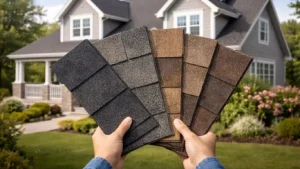
Look at Shingle Samples Outdoors
Roofing colours often look different depending on lighting conditions. Viewing shingle samples indoors may not accurately represent how the roof will appear once installed.
It is best to look at samples outdoors and view them at different times of day. Natural sunlight can reveal colour variations that may not be visible under indoor lighting.
Some homeowners also choose to look at nearby homes with similar shingle colours to get a better sense of the finished appearance.
Architectural Style Matters
The architectural style of a home can also influence which shingle colours look best.
- Modern homes often use darker, uniform roofing colours
- Traditional homes may benefit from blended or weathered colour tones
- Historic homes often pair well with natural earth tones
Matching the roof colour to the home’s architectural style helps create a more balanced and intentional exterior design.
Work With a Roofing Professional
Experienced roofing contractors often help homeowners select shingle colours during the quoting process. Contractors can recommend colours that work well with the home’s exterior materials and architectural design.
Many manufacturers also provide digital visualization tools that allow homeowners to preview how different shingle colours may look on their home.