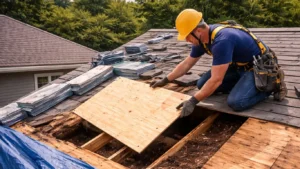
Roof replacement is a major construction project that involves removing old roofing materials, installing new ones, and working around the entire exterior of your home. While the focus is on the roof itself, professional roofing contractors also take steps to protect the rest of your property during the process.
Experienced roofing crews use a variety of methods to minimize disruption, protect landscaping, and ensure the work area stays organized and safe throughout the installation.
Protecting Landscaping Around the Home
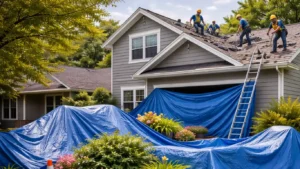
Flower beds, shrubs, and landscaping features often sit directly below the roofline, which means they could potentially be exposed to falling debris during the tear-off stage.
Professional roofers typically place protective tarps over landscaping areas before work begins. These tarps help catch loose shingles, nails, and other debris while reducing the risk of damage to plants and garden beds.
In many cases, crews will also move lightweight landscaping items temporarily if they are positioned close to the home.
Using Tarps to Control Debris
Removing old roofing materials is one of the messiest stages of a roof replacement. To manage this process, roofing crews often use large tarps positioned strategically around the house.
Tarps help contain debris and make cleanup faster and more efficient. By directing materials toward specific areas, crews can prevent debris from spreading across the yard.
This controlled approach helps keep the property organized throughout the project.
Strategic Placement of Dump Trailers or Bins
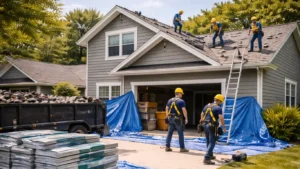
Roofing projects generate a significant amount of waste, including old shingles, underlayment, and damaged materials. Professional contractors typically place a dump trailer or disposal bin in the driveway or a nearby staging area.
Roofers can then transfer debris directly into the container as the old roof is removed. This reduces the amount of material left on the ground and keeps the work site safer for both workers and homeowners.
Magnetic Nail Sweeps
Roofing nails are small but important components of the installation process. After a roof replacement, professional crews perform magnetic sweeps around the property to collect loose nails that may have fallen during the project.
Large rolling magnets are used to scan areas such as:
- Driveways
- Lawns
- Walkways
- Garden beds
This extra step helps protect homeowners, children, pets, and vehicles from stray nails.
Protecting Siding and Exterior Surfaces
During roof replacement, workers move materials and tools across the roofline and near the edges of the home. Professional contractors take care to prevent contact with siding, windows, and exterior finishes.
Some crews use protective boards or coverings near vulnerable areas, especially when removing heavy materials.
This careful approach reduces the risk of accidental scuffs or damage during installation.
Organized Work Areas
Professional roofing crews maintain organized job sites to improve both safety and efficiency. Materials are typically staged in specific locations, tools are stored securely, and debris is removed regularly throughout the day.
Keeping the work area organized helps prevent unnecessary hazards and allows the installation process to move smoothly.
Protecting Gutters
Gutters run along the edge of the roof and can be vulnerable during the tear-off process. Experienced roofers take care to prevent debris from bending or clogging gutter systems.
In some cases, crews may temporarily remove gutter sections or use protective boards to guide debris away from the gutter line.
This helps ensure the drainage system remains intact once the new roof is installed.
Daily Cleanup During the Project
Many roofing contractors perform cleanup tasks throughout the installation rather than waiting until the very end. Removing debris periodically keeps the work site tidy and prevents materials from building up around the home.
This ongoing cleanup also helps crews maintain a safe working environment.
Final Property Inspection
Once the new roof is installed, professional contractors complete a final walkthrough of the property. This includes removing remaining debris, performing another magnetic nail sweep, and checking that landscaping and outdoor areas are left in good condition.
The goal is to leave the property as clean as possible after the roofing project is finished.
Professional Roofing Includes Property Protection
Roof replacement may involve heavy materials and active construction, but experienced roofing contractors take many steps to protect the home and surrounding property during the process.
From protective tarps and debris control to magnetic nail sweeps and organized cleanup, these practices help ensure homeowners can feel confident throughout the installation.
When choosing a roofing contractor, asking about their property protection procedures is another good way to evaluate their professionalism and attention to detail.