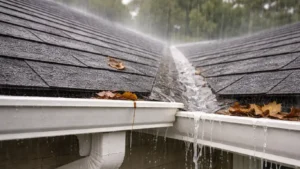
A roof’s primary job is to protect your home from the elements, and one of its most important responsibilities is managing water.
Every time it rains or snow melts, large amounts of water flow across the surface of your roof. A well-designed roofing system channels that water safely toward the gutters and away from the home.
If water does not drain properly, it can begin to pool or back up along vulnerable areas of the roof.
Over time, poor drainage can lead to problems such as:
- Roof leaks
- Premature shingle wear
- Ice dam formation
- Structural moisture damage
Several aspects of roof design influence how effectively water drains away from the structure.
Roof Slope and Pitch
One of the most important factors affecting drainage is the roof’s slope, often referred to as pitch.
Steeper roofs allow water and snow to shed more quickly. Gravity helps move water down the roof surface and into the gutter system.
Low-slope roofs drain more slowly and require additional waterproofing layers to prevent water infiltration.
Many homes in Halifax feature moderate to steep roof pitches, which help handle the region’s heavy rainfall and winter snow accumulation.
Proper slope ensures water does not remain on the roof surface for extended periods.
Roof Valleys
Roof valleys are areas where two roof slopes meet. These channels naturally collect and direct water toward the gutters.
Because valleys handle large volumes of water during storms, they are one of the most critical drainage areas on a roof.
Proper valley design and installation are essential for preventing leaks.
Roof valleys typically include additional flashing or waterproof underlayment to provide extra protection in these high-flow zones.
Keeping valleys clear of debris also helps maintain proper water flow.
Overhangs and Eaves
Roof overhangs, also known as eaves, extend the roof beyond the exterior walls of the home.
This design feature helps direct rainwater away from siding and windows before it enters the gutter system.
Overhangs also help protect the exterior walls from direct exposure to rainfall.
Homes with very short overhangs may experience more water runoff along the siding during heavy storms.
Properly sized overhangs contribute to better overall water management.
Gutters and Downspouts
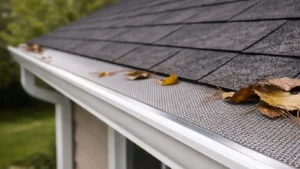
Even with a well-designed roof, gutters and downspouts are necessary to complete the drainage system.
Once water reaches the roof edge, gutters collect it and guide it toward downspouts that carry the water away from the home’s foundation.
If gutters become clogged or damaged, water may spill over the roof edge instead of draining properly.
This is why regular gutter maintenance plays an important role in maintaining effective roof drainage.
Roof Materials and Water Flow
The type of roofing material used can also influence how water moves across the roof surface.
Asphalt shingles, metal roofing, and other materials each have slightly different drainage characteristics.
Most modern roofing materials are designed to shed water efficiently when installed at the correct slope.
Proper installation ensures that water flows over the surface of the material rather than penetrating beneath it.
Drainage Challenges During Storms
Halifax regularly experiences strong storms that can produce heavy rainfall over short periods.
During these events, the roof drainage system must handle large volumes of water quickly.
Homes with poor drainage design or clogged gutters may struggle to manage this sudden runoff.
Water that cannot drain effectively may begin to pool in valleys or along roof edges.
This is why maintaining clear drainage paths across the roof is essential for preventing storm-related damage.
Keeping Roof Drainage Systems Working Properly
While roof design plays a major role in water management, ongoing maintenance is equally important.
Homeowners can help maintain proper drainage by:
- Keeping gutters clean and clear
- Removing debris from roof valleys
- Checking for damaged shingles after storms
- Scheduling periodic professional inspections
These simple steps help ensure water continues flowing safely away from the roof and foundation.