One of the first questions homeowners ask when considering a new roof is simple: how much will it cost?
The honest answer is that roof replacement costs can vary significantly depending on several factors. Roof size, material choices, roof complexity, and the condition of the existing roof structure all play a role in determining the final price.
While every home is different, understanding how roofing costs are calculated can help homeowners set realistic expectations before requesting quotes.
Typical Roof Replacement Costs
For many homes with asphalt shingles, roof replacement costs typically fall within a predictable range.
In many cases, homeowners can expect roof replacement to cost somewhere between $8,000 and $18,000 depending on roof size, material quality, and installation complexity.
Larger homes, complex roof designs, or premium materials can increase the total cost beyond this range.
It’s important to remember that roofing quotes are based on the specific details of each home rather than a simple flat rate.
Roof Size and Square Footage
The size of the roof is one of the biggest factors affecting cost. Roofing materials are measured in “squares,” with one square representing 100 square feet of roofing surface.
A larger roof requires more shingles, underlayment, fasteners, and labour, which increases the overall project cost.
Even homes with similar interior square footage may have different roof sizes depending on their design and slope.
Roof Complexity
Not all roofs are equally simple to replace.
Features that increase installation complexity can affect labour time and material requirements. These include:
- Multiple roof valleys
- Dormers and skylights
- Steep roof slopes
- Chimneys or wall intersections
- Complex rooflines
The more complex a roof design is, the more time and care it takes to install the new roofing system properly.
Material Selection
The type of roofing material also affects the total price.
Standard architectural asphalt shingles are the most common option for residential roofs and typically offer the best balance between durability and affordability.
Higher-end roofing materials such as premium designer shingles, metal roofing, or specialty systems can increase costs but may also offer longer lifespans or enhanced performance.
Roofing System Components
A roof is more than just shingles. A complete roofing system includes multiple layers designed to protect the home from moisture and weather damage.
These components typically include:
- Roof decking
- Underlayment
- Ice and water shield
- Flashing
- Ventilation components
- Shingles
The quality and coverage of these materials can influence the overall cost of the project.
Removal of the Existing Roof
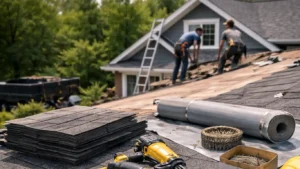
Before a new roof can be installed, the old roofing materials must usually be removed. This process is known as a tear-off.
Tear-off allows contractors to inspect the underlying decking and ensure the new roofing system is installed on a solid foundation.
Removing and disposing of old roofing materials adds labour time and disposal costs to the project.
Potential Decking Repairs
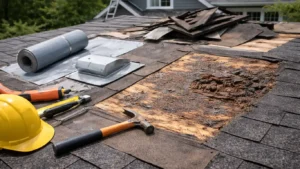
Once the existing shingles are removed, contractors may discover areas of roof decking that have been damaged by moisture.
Damaged decking must be replaced before new shingles are installed. Because this damage cannot always be seen during the initial inspection, decking repairs are sometimes listed as a potential additional cost in roofing estimates.
Ventilation Improvements
Proper roof ventilation is essential for preventing moisture buildup and reducing heat in the attic.
If a home’s existing ventilation system is insufficient, contractors may recommend upgrades such as ridge vents or improved soffit ventilation.
While ventilation upgrades can increase the project cost slightly, they help extend the lifespan of the roof and improve overall attic performance.
Why Roofing Quotes Can Vary
It’s common for homeowners to receive roofing quotes that differ by several thousand dollars.
This variation often reflects differences in:
- Material quality
- Installation methods
- Scope of work
- Warranty coverage
- Contractor experience
Comparing quotes carefully ensures that homeowners understand exactly what is included before making a decision.
The Value of a Professional Installation
While cost is an important consideration, the quality of installation is just as important as the materials used.
A properly installed roofing system protects the home from weather, prevents leaks, and ensures the roof reaches its full lifespan.
Choosing an experienced, reputable roofing contractor helps ensure the job is completed correctly the first time.
Getting an Accurate Roofing Quote
The best way to determine the cost of replacing your roof is to request a professional inspection and detailed quote.
A contractor can evaluate the roof’s size, structure, materials, and ventilation system to provide an estimate tailored to the home.
This inspection ensures that homeowners receive an accurate price and a clear understanding of the work involved.