Roofs are exposed to constant changes in temperature, moisture, and weather. Over time, these conditions can cause small issues to develop beneath the surface of the roofing system. One of the most common of these problems is known as a nail pop.
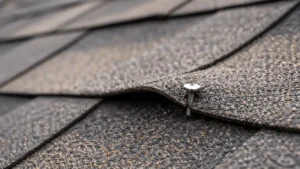
Nail pops occur when roofing nails begin to push upward through the shingles above them. As the nail head rises, it can lift or distort the shingle covering it, leaving the roof vulnerable to water intrusion.
While nail pops are often considered a minor roofing issue, they can lead to leaks if they are not addressed. Understanding why nail pops happen and how they affect shingles can help homeowners identify potential problems early.
What Is a Nail Pop?
A nail pop occurs when a roofing nail that secures the shingles to the roof deck gradually works its way upward. As the nail shifts out of place, the head of the nail begins to press against the underside of the shingle.
Eventually, the pressure can lift the shingle slightly or even push the nail through the surface of the roofing material.
Once the shingle is lifted, it may no longer lie flat against the roof. This creates an opening where water can enter beneath the roofing material during rain or snow.
Why Nail Pops Occur
Nail pops can develop for several different reasons, most of which relate to natural movement in the roofing system over time.
Expansion and Contraction
Roofing materials expand and contract as temperatures change. During warm weather, the roof structure and decking expand slightly. When temperatures drop, the materials contract again.
This repeated movement can slowly loosen roofing nails from the wood decking beneath them. Over time, the nails may begin to rise upward.
Wood Movement in the Roof Deck
The plywood or OSB decking beneath the shingles can also expand or shrink as humidity levels change. This natural movement can gradually push nails upward if they are no longer tightly anchored in the wood.
As the nail shifts upward, it may start to lift the shingle above it.
Improper Nail Placement
If roofing nails are not driven correctly during installation, they may be more likely to loosen over time. Nails that are placed too high on the shingle or not fully seated into the decking may not hold as securely.
Incorrect nail placement is one reason nail pops can appear earlier than expected on some roofs.
Roof Aging
As shingles age, they become less flexible and more brittle. This can make them more susceptible to lifting when pressure from a nail head develops beneath them.
Older roofs are therefore more likely to experience nail pops as the roofing system continues to age.
How Nail Pops Affect Shingles
When a nail begins to push upward, it disrupts the flat surface of the shingle. Even a small lift can create a pathway for water to travel beneath the roofing material.
Wind can also catch the edge of a lifted shingle and cause it to bend or tear during storms. Over time, this can lead to additional shingle damage or even missing shingles.
Because the opening around the nail is small, leaks caused by nail pops can sometimes be slow and difficult to detect at first.
Signs of Nail Pops on a Roof
Homeowners may be able to identify nail pops by looking for small irregularities in the roof surface.
Common signs include:
- Shingles that appear slightly raised or lifted
- Small bumps or protrusions beneath shingles
- Nail heads visible through shingles
- Localized shingle distortion
In some cases, nail pops are discovered during routine roof inspections rather than from ground-level observations.
How Roofers Repair Nail Pops
Repairing nail pops is typically a straightforward process when the issue is caught early.
A roofing contractor will usually remove the lifted shingle, secure the area with properly placed fasteners, and reseal the shingle to restore the roof’s protective barrier.
If the original nail has worked loose, it may be replaced with a new fastener driven securely into the roof deck.
Sealant is often applied over the repaired area to prevent water from entering around the fastener.
When Nail Pops May Indicate Larger Problems
A few isolated nail pops are relatively common and may not indicate major issues with the roof. However, if nail pops appear across multiple areas of the roof, it may signal broader problems.
Widespread nail pops can sometimes occur when:
- The roof deck is deteriorating
- The roofing system is reaching the end of its lifespan
- The original installation was performed incorrectly
In these situations, a professional inspection can help determine whether localized repairs are sufficient or if larger sections of the roof require attention.
Preventing Nail Pops
While nail pops cannot always be completely prevented, proper installation and maintenance can reduce the likelihood of the issue developing.
Using correct fastening techniques during roof installation helps ensure nails remain secure in the roof deck. Maintaining proper attic ventilation can also reduce extreme temperature swings that contribute to roof movement.
Regular roof inspections can help identify nail pops early before they lead to lifted shingles or leaks.