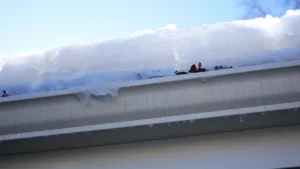
Ice dams are a common winter roofing problem in colder climates. Many homeowners notice them as thick ridges of ice forming along the edge of the roof after snowfall. While they may look harmless at first, ice dams can trap water on the roof and eventually cause leaks inside the home.
Understanding why ice dams form and how to prevent them can help homeowners avoid costly roof damage and interior water issues during winter months.
What Is an Ice Dam?
An ice dam is a buildup of ice that forms along the lower edge of a roof, usually near the gutters. This ridge of ice blocks melting snow from draining properly off the roof.
When snow on the upper portion of the roof melts, the water flows downward until it reaches the colder edge of the roof. There, the water refreezes and gradually builds up into a thicker barrier of ice.
As this ridge grows, additional meltwater can become trapped behind it. With nowhere else to go, the water may begin to seep under shingles and into the roofing system.
Why Ice Dams Form
Ice dams develop when different areas of the roof are at different temperatures. The upper sections of the roof become warm enough to melt snow, while the lower edges remain cold enough for water to refreeze.
This temperature imbalance often occurs because heat from the home escapes into the attic and warms the roof deck from underneath.
Several factors contribute to this process.
1. Heat Loss From the Attic
One of the primary causes of ice dams is warm air escaping from the living space into the attic. When the attic becomes warmer than the outside air, it can warm the roof surface above it.
This warmth melts the snow on the roof, creating water that flows downward toward the colder edges of the roofline.
2. Poor Attic Insulation
Insufficient insulation allows heat from the home to transfer more easily into the attic space. When insulation levels are too low or uneven, sections of the roof can warm up enough to melt snow even during freezing weather.
Proper insulation helps keep the attic temperature closer to the outdoor temperature, reducing uneven snow melt on the roof.
3. Inadequate Roof Ventilation
Ventilation helps regulate the temperature of the attic by allowing cold air to circulate beneath the roof deck. Without proper airflow, heat can become trapped in the attic space.
A balanced ventilation system—typically including both intake vents and exhaust vents—helps maintain consistent temperatures across the roof surface.
4. Heavy Snow Accumulation
Large amounts of snow can also contribute to ice dam formation. Thick snow layers act as insulation on the roof, trapping heat beneath them and increasing the likelihood of uneven melting.
Repeated cycles of melting and refreezing allow ice dams to grow larger over time.
Problems Ice Dams Can Cause
While the ice itself forms along the edge of the roof, the real danger comes from the water trapped behind it. When meltwater cannot drain off the roof, it may begin to work its way under shingles and into the roof structure.
Potential problems caused by ice dams include:
- Water leaks into ceilings and walls
- Damage to attic insulation
- Mold and mildew growth
- Deterioration of roofing materials
- Damage to gutters and roof edges
If the problem continues over multiple winters, these issues can gradually lead to more significant structural damage.
How to Prevent Ice Dams
Preventing ice dams usually involves addressing the temperature differences that allow them to form. By reducing heat loss and improving airflow in the attic, homeowners can significantly reduce the risk of ice dams developing.
Improve Attic Insulation
Adding sufficient insulation to the attic helps prevent warm air from reaching the roof deck. Well-insulated attics maintain more consistent temperatures across the roof surface, which reduces uneven snow melt.
Improve Ventilation
Proper ventilation allows cold air to circulate through the attic and carry excess heat away from the roof deck. This helps keep the roof temperature closer to the outdoor temperature.
Many roofing systems use a combination of soffit vents and ridge vents to create continuous airflow through the attic.
Seal Air Leaks
Warm air can escape into the attic through small openings around light fixtures, attic hatches, and ventilation ducts. Sealing these air leaks can help prevent heat from warming the roof from below.
Remove Excess Snow Safely
After heavy snowfalls, some homeowners choose to remove excess snow from the lower sections of the roof using a roof rake. This can reduce the amount of melting and refreezing that leads to ice dam formation.
However, this should be done carefully from the ground to avoid damaging shingles or risking personal injury.
When to Have Your Roof Inspected
If your home experiences recurring ice dams each winter, it may indicate underlying issues with insulation, ventilation, or roof design. A roofing professional can evaluate the roofing system and identify areas where improvements may help prevent future problems.
Addressing these underlying issues is usually more effective than simply removing ice dams after they form.