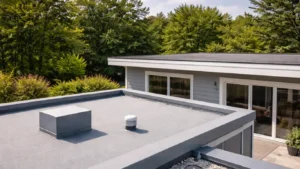
While most homes use sloped roofing systems designed to shed water quickly, many residential properties also contain sections with very low slopes or flat surfaces. These areas often appear over garages, porches, dormers, additions, or modern architectural features.
Flat and low-pitch roofs require different materials and installation techniques than traditional sloped asphalt shingle roofs. Because water drains more slowly on these surfaces, proper waterproofing and drainage become especially important.
Understanding how flat and low-pitch roofing works can help homeowners identify potential issues and make informed decisions when repairs or replacements are needed.
What Is Considered a Low-Pitch Roof?
Roof pitch refers to the steepness of a roof. It is typically expressed as a ratio showing how much the roof rises vertically for every 12 inches of horizontal distance.
For example, a roof with a 6:12 pitch rises six inches for every twelve inches of horizontal run.
Most asphalt shingle roofs require a minimum pitch of approximately 4:12 to function properly. When the slope becomes shallower than this, the roof is often considered low pitch.
Roofs with very little slope are commonly referred to as flat roofs, although most still have a slight incline to allow water to drain.
Where Flat or Low-Pitch Roofs Are Common
Even homes with traditional sloped roofs may include smaller flat or low-slope sections. These areas are commonly found on:
- Garage roofs
- Front porches or covered entrances
- Dormers
- Home additions
- Modern architectural roof designs
- Commercial-style residential buildings
Because these areas behave differently than steep roofs, they require specialized materials designed for slower water drainage.
Why Asphalt Shingles Often Don’t Work on Flat Roofs
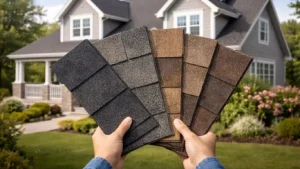
Asphalt shingles are designed to shed water quickly on sloped surfaces. When installed on low-pitch roofs, water may drain too slowly and can work its way underneath the shingle layers.
This increases the risk of leaks and moisture damage.
For this reason, roofing contractors typically avoid installing standard shingles on flat or very low-slope sections unless additional waterproofing systems are used.
Common Materials Used for Flat Roofs
Several roofing materials are specifically designed to handle flat or low-pitch roof surfaces.
Modified Bitumen
Modified bitumen roofing is one of the most common materials used for residential flat roofs. It consists of asphalt-based sheets reinforced with fiberglass or polyester.
These sheets are installed in layers and sealed together to create a durable waterproof membrane.
EPDM Rubber Roofing
EPDM roofing systems use a synthetic rubber membrane that provides excellent water resistance and flexibility.
This material is commonly used on both residential and commercial flat roofs and is known for its durability.
TPO Roofing
TPO (thermoplastic polyolefin) roofing systems use a single-ply membrane designed to reflect sunlight and provide strong waterproof protection.
This material is commonly used on modern buildings and some residential flat roof applications.
Drainage Is Critical for Flat Roofs
Because flat roofs do not shed water as quickly as sloped roofs, proper drainage systems are essential.
Standing water can place additional stress on roofing materials and increase the risk of leaks.
Flat roofs are typically designed with slight slopes or drainage systems that direct water toward specific exit points.
Common Drainage Methods
- Internal roof drains
- Scuppers along roof edges
- Exterior gutters and downspouts
- Slightly sloped framing systems
Maintaining these drainage systems is important to ensure water does not accumulate on the roof surface.
Common Problems With Flat Roof Sections
Because of their unique design, flat and low-pitch roofs can experience different types of problems than traditional sloped roofs.
Ponding Water
Ponding occurs when water remains on the roof surface for extended periods after rainfall. This can accelerate material deterioration.
Membrane Damage
Flat roofing systems rely on continuous waterproof membranes. If these membranes become punctured or damaged, water can enter the roof structure.
Drainage Blockages
Leaves, debris, or ice can block drainage systems, causing water to accumulate on the roof surface.
Maintenance for Flat Roofs
Regular inspection and maintenance can help extend the lifespan of flat roofing systems.
- Remove debris from drainage areas
- Inspect seams and flashing
- Check for standing water after heavy rain
- Monitor the condition of the roofing membrane
Because small issues can lead to leaks quickly on flat roofs, early detection is especially important.
When to Replace a Flat Roof
Flat roofing systems eventually wear down over time. Signs that replacement may be needed include persistent leaks, widespread membrane damage, or recurring drainage problems.
A roofing professional can inspect the roof and determine whether repairs are possible or if replacement is the better long-term solution.
=