When homeowners receive a roofing estimate, the price at the bottom of the page can feel like the final number. But roofing projects sometimes include additional costs that only become clear once work begins.
This doesn’t necessarily mean the contractor was being dishonest. Many roofing systems have components that are hidden beneath existing shingles or inside the attic structure. These conditions can only be fully inspected once the old roofing materials are removed.
Understanding the most common hidden costs in roofing estimates helps homeowners plan ahead and avoid surprises during their project.
Roof Decking Repairs
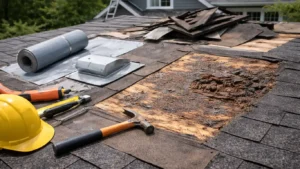
The roof decking is the wooden foundation beneath your shingles. Over time, leaks or moisture can cause sections of decking to rot or weaken.
Because shingles cover the decking, it is often impossible to see this damage until the old roofing materials are removed. If damaged decking is discovered during installation, those sections need to be replaced before the new roof can be installed.
Many roofing quotes include a note stating that decking replacement will be charged separately if required. This is one of the most common additional costs in roofing projects.
Flashing Replacement
Flashing protects vulnerable areas of the roof where water is most likely to enter. These areas include chimneys, roof valleys, skylights, and wall intersections.
Some estimates assume that existing flashing can be reused. However, if the flashing is rusted, improperly installed, or damaged during the tear-off process, it may need to be replaced.
Replacing flashing improves long-term leak protection but may increase the final project cost if it was not included in the original estimate.
Ventilation Upgrades
Roof ventilation plays a major role in roof lifespan and attic health. Poor ventilation can cause heat buildup, moisture accumulation, and premature shingle aging.
During a roofing project, contractors may discover that the existing ventilation system is insufficient. In these cases, upgrades such as ridge vents, additional roof vents, or improved soffit ventilation may be recommended.
These upgrades improve the performance of the roof but can add to the overall project cost.
Ice and Water Shield Expansion
In colder climates, ice and water shield is installed along the eaves and in roof valleys to prevent leaks caused by ice dams.
Some estimates include only the minimum required coverage, while others install additional protection in vulnerable areas such as dormers or roof penetrations.
If additional protection is recommended once work begins, it can increase material costs slightly but often provides better long-term protection.
Disposal and Cleanup Costs
Roof replacement generates a large amount of debris. Old shingles, nails, flashing, and underlayment must all be removed and properly disposed of.
Some contractors include disposal and dumpster fees directly in their estimate. Others list these costs separately or adjust them depending on the final amount of material removed.
It’s always a good idea to confirm that cleanup and disposal are clearly addressed in the estimate.
Structural Repairs
In rare cases, roofing crews may uncover deeper structural issues such as sagging rafters, damaged framing, or long-term water damage inside the roof structure.
These repairs are not typical, but when they are required, they must be addressed before the roofing system can be installed properly.
Structural repairs are usually discussed with the homeowner before any additional work proceeds.
Why Transparency Matters in Roofing Quotes
Professional roofing contractors try to be as transparent as possible about potential additional costs. Many estimates include notes explaining that certain items can only be confirmed once the roof is opened.
This transparency helps homeowners understand that roofing projects involve some variables that cannot be fully assessed during an initial inspection.
How Homeowners Can Avoid Surprises
The best way to avoid unexpected costs is to ask questions before signing a roofing contract.
Homeowners should ask contractors how they handle:
- Decking replacement
- Flashing replacement
- Ventilation upgrades
- Disposal fees
- Unexpected structural issues
A reputable contractor will explain which items are included in the estimate and which situations could lead to additional costs.