Roof valleys are one of the most critical areas of any roofing system. They handle a large volume of water runoff and are particularly vulnerable to leaks if not installed properly. One installation method sometimes used in asphalt shingle roofing is called a “California Valley” (also known as a closed-cut valley with a woven appearance). While it can be faster to install and uses fewer materials, many professional roofers consider California valleys a less reliable option compared to traditional valley systems.
Understanding the drawbacks of California valleys can help homeowners make better decisions when replacing or repairing their roof.
What Is a California Valley?
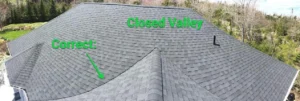
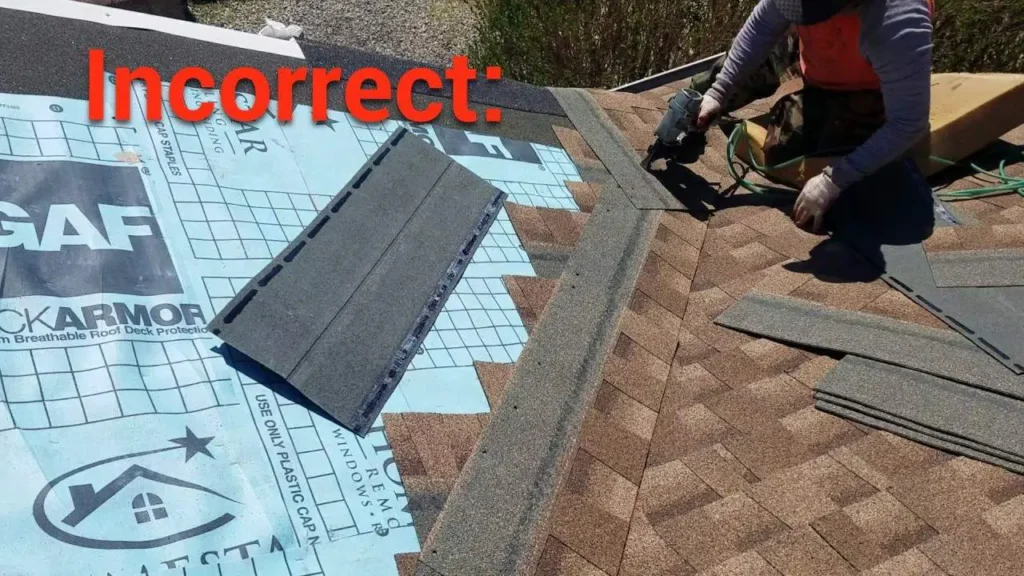
A California valley is created when shingles from one side of the roof are run straight through the valley, and shingles from the other side are cut and laid over top of them. Instead of using exposed metal flashing or a carefully cut closed valley, the valley is essentially covered entirely with shingles.
This method can reduce labor time because roofers do not need to carefully weave shingles or install metal flashing in the valley. However, this shortcut can create long-term problems.
Concentrated Water Flow
Roof valleys naturally carry large amounts of water during rainstorms. Because California valleys rely entirely on shingles rather than exposed metal flashing, water is forced to run over multiple shingle joints.
Every joint and nail hole in a valley becomes a potential point of water intrusion. Over time, constant water flow can wear down the shingle surface and increase the likelihood of leaks.
Premature Wear and Tear
The shingles used in a California valley often experience much heavier water exposure than shingles in other areas of the roof. Water, debris, and ice tend to collect in valleys, accelerating deterioration.
As shingles age, granules can wash away more quickly in these areas, reducing the protective layer that shields the roof from UV rays and moisture. This can lead to premature shingle failure directly in the valley, which is one of the worst locations for a roof leak.
Higher Risk of Debris Buildup
California valleys can also create a small ridge or uneven surface where shingles overlap. This can trap leaves, pine needles, and other debris.
When debris builds up in the valley, it prevents water from flowing freely down the roof. Instead, water may pool or back up under shingles, increasing the risk of leaks and ice dam formation in colder climates.
More Difficult Repairs
If a leak develops in a California valley, repairs are often more complicated than with other valley types. Because the valley is integrated into the shingle system, multiple shingles may need to be removed or replaced to access the problem area.
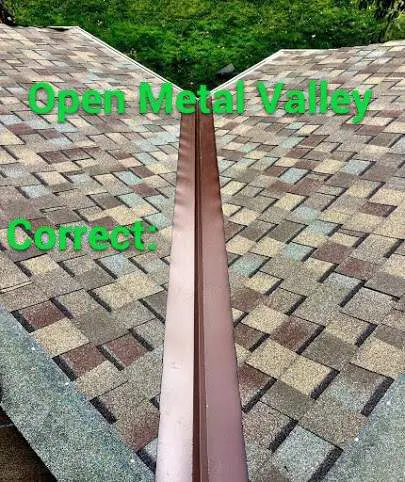
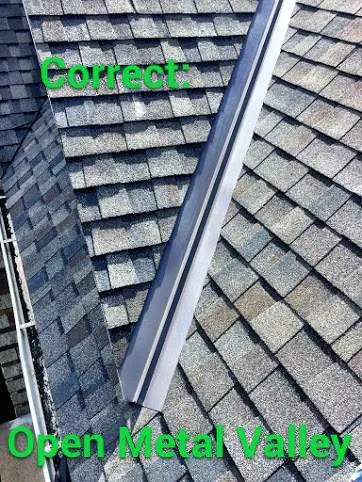
By contrast, open metal valleys can often be repaired more easily because the flashing is visible and accessible.
A Better Alternative
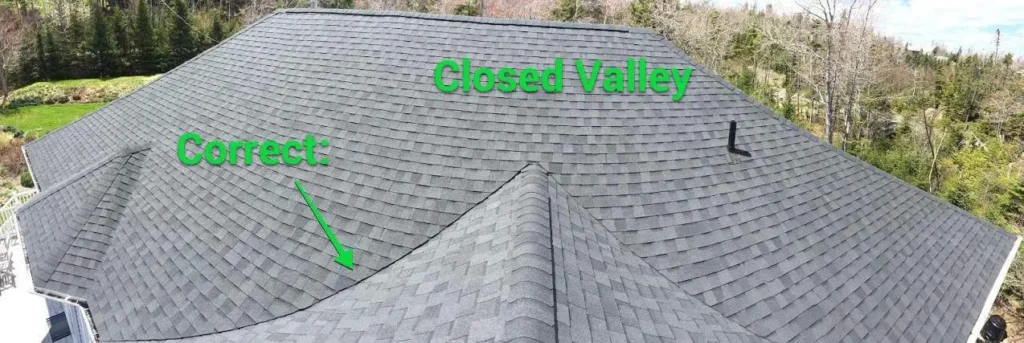
Many roofing professionals prefer open metal valleys or properly installed closed-cut valleys. These methods allow water to flow directly down a metal flashing channel or along a cleanly cut shingle line, reducing the amount of water sitting on shingle seams.
Metal valleys in particular provide a durable, smooth surface that helps water and debris move off the roof efficiently.
What Should Homeowner’s Do?
While California valleys may save time during installation, they can create long-term durability issues. The increased exposure to water, potential debris buildup, and higher likelihood of leaks make them a less reliable option for many roofing systems.
When investing in a new roof, it is worth discussing valley installation methods with your contractor. A properly installed valley system can significantly improve the longevity and reliability of your roof, protecting your home from one of the most common sources of roofing leaks.