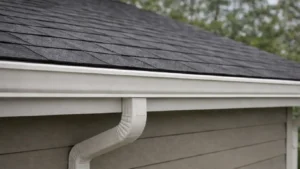
While gutters are technically separate from your roofing system, they play an important role in protecting your home from water damage. A roof collects rainwater and channels it toward the edges of the home, where gutters direct that water safely away from the foundation.
Without a properly functioning gutter system, water can spill directly off the roofline and accumulate around the home.
Over time, this can lead to issues such as:
- Foundation damage
- Basement moisture problems
- Siding deterioration
- Landscape erosion around the home
Because gutters manage how water leaves your roof, they are closely connected to the overall performance of your roofing system.
Do You Need to Replace Gutters When Replacing a Roof?
In many cases, gutters do not need to be replaced during a roof installation. If your existing gutters are in good condition and properly sized for the home, they can often remain in place while the new roof is installed.
However, roof replacement is often a good opportunity to evaluate the condition of the gutter system.
Since roofing crews are already working around the roof edges, it can be more convenient and cost-effective to address gutter issues at the same time if they exist.
Homeowners should consider the age, condition, and performance of their gutters before deciding whether replacement is necessary.
Signs Your Gutters May Need Replacement
During a roof replacement consultation, your contractor may inspect the gutter system and point out potential problems.
Signs that gutters may need replacement include:
- Visible sagging or pulling away from the roofline
- Frequent clogging or poor water flow
- Cracks, holes, or rust in metal gutters
- Water spilling over the sides during rainstorms
- Loose or failing gutter brackets
If gutters are no longer directing water away from the home effectively, replacing them during a roof project can help improve the overall drainage system.
Benefits of Replacing Gutters During a Roof Project
While not always necessary, replacing gutters at the same time as a roof can offer a few advantages.
First, it allows contractors to ensure that the gutter system is properly aligned with the new roofing components, including drip edge and fascia areas.
Second, it can reduce labour costs since installers are already working along the roofline.
Finally, replacing both systems together can give the home a cleaner, more cohesive appearance once the project is finished.
For older homes with aging gutters, this can be a convenient time to upgrade the entire drainage system.
Proper Gutter Sizing for Halifax Homes
Halifax experiences significant rainfall throughout the year, along with heavy snow melt during the winter months.
Because of this, properly sized gutters are important for managing water runoff from the roof.
Most residential homes use either five-inch or six-inch gutter systems.
Larger roofs or homes with steep roof slopes may benefit from larger gutter systems that can handle higher volumes of water.
Your roofing contractor can help determine whether your current gutters are appropriately sized for the home.
Gutter Guards and Maintenance
Some homeowners also consider installing gutter guards during a roof replacement project.
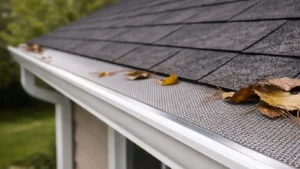
Gutter guards are designed to reduce the amount of debris entering the gutters, which can help minimize clogging and maintenance.
While they do not eliminate gutter cleaning entirely, they can reduce the frequency of maintenance in homes surrounded by trees.
Whether or not gutter guards are installed, routine maintenance remains important for keeping the drainage system working properly.
Gutters and roofing systems work together to protect your home from water damage.
Although replacing gutters is not always required when installing a new roof, it can be a good opportunity to evaluate their condition and ensure the entire drainage system is functioning properly. If your gutters are aging, damaged, or poorly sized, replacing them during a roof project may improve water management and help protect your home long term.
A roofing contractor can help assess your current gutters and recommend whether repair, replacement, or simple maintenance is the best option.