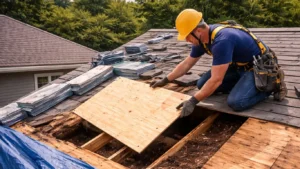
Replacing a roof is a major home improvement project, but a little preparation beforehand can make the entire process smoother and safer. While your roofing contractor handles the installation itself, homeowners can take a few simple steps to prepare their property before the crew arrives.
Taking the time to prepare your home helps protect your belongings, makes the job easier for the roofing crew, and reduces the chances of unexpected issues during the installation.
Move Vehicles Out of the Driveway
Replacing your roof requires space for trucks, trailers, and material deliveries. Roofing crews often use the driveway to stage equipment, load debris into disposal bins, and move materials efficiently.
Before installation day, move vehicles out of the driveway and nearby street parking areas if possible. This prevents damage from falling debris and gives the crew clear access to the work area.
Clear Items Around the Exterior of Your Home
Roofing work involves removing old shingles and materials, which can occasionally fall around the perimeter of the home during the tear-off process.
Homeowners should move outdoor items away from the house, including:
- Patio furniture
- Barbecues
- Planters and decorative items
- Children’s toys
- Outdoor equipment
Creating clear space around the house helps protect these items and allows roofing crews to work more safely.
Protect Items in the Attic
Roof replacement can create vibrations as old shingles are removed and new materials are installed. These vibrations may cause dust or small debris from the roof deck to fall into the attic.
If your attic contains storage items, consider covering them with tarps or plastic sheets before the project begins. This simple step helps keep stored belongings clean during the installation.
Secure Fragile Items Inside the Home
The same vibrations that affect the attic can sometimes travel through the structure of the home. While this is completely normal during roofing work, it can occasionally shift items hanging on walls or shelves.
Before installation day, homeowners may want to:
- Remove fragile items from walls
- Secure pictures and mirrors
- Stabilize decorative shelves or displays
These precautions reduce the chance of items falling during the roofing process.
Trim Trees Near the Roof
If tree branches extend close to the roofline, trimming them beforehand can help roofing crews work more efficiently. Overhanging branches can obstruct access to certain roof areas and make installation more difficult.
Clearing branches away from the roof also reduces the chance of debris falling into the work area.
Plan for Noise During Installation
Roof replacement can be noisy, especially during the tear-off phase when old shingles are removed. Hammering, movement on the roof, and material handling all create sound throughout the day.
Homeowners who work from home or have young children or pets may want to plan accordingly for installation day. Some families choose to schedule errands or spend part of the day away from home while work is underway.
Inform Your Neighbors
Roof replacement is usually completed quickly, often within one or two days depending on the size of the home. However, notifying neighbors ahead of time is a courteous gesture.
Letting neighbors know about the upcoming project helps them prepare for temporary noise or increased activity in the area.
Ensure Access to Electrical Outlets
Roofing crews occasionally require access to exterior electrical outlets for tools or equipment. If your contractor mentions needing power access, make sure the outlet is accessible and functioning.
This small step can help prevent delays on installation day.
Keep Pets Safely Indoors
Roofing projects involve unfamiliar workers, noise, and open gates or equipment around the property. To keep pets safe, it is best to keep them indoors or in a secure area during installation.
This prevents pets from wandering into work areas and ensures the crew can work without interruption.
Understand the Installation Timeline
Before the project begins, homeowners should confirm the expected installation schedule with their contractor. Knowing when crews will arrive, how long the project should take, and what to expect during the process can help reduce uncertainty.
Most asphalt shingle roof replacements are completed quickly, often within a single day depending on the size and complexity of the roof.
Preparing for a Smooth Roofing Project
This may seem like a major disruption, but with proper planning it can be a straightforward and efficient process.
By preparing your home ahead of time, you help create a safer work environment and ensure the installation proceeds as smoothly as possible.
A professional roofing contractor will guide homeowners through the process, but these simple preparation steps can make installation day easier for everyone involved.