When most homeowners think about a roof, they usually picture shingles, flashing, or gutters. However, one of the most important components of the entire roofing system is much smaller: the nails and fasteners that hold everything in place.
Roofing nails may seem like a minor detail, but they play a critical role in the strength, durability, and performance of a roof. The correct type, placement, and installation of fasteners help ensure that shingles stay secure during storms and that the roof performs properly for many years.
Even small mistakes with roofing nails can lead to issues such as lifted shingles, wind damage, and premature roof failure.
What Are Roofing Nails?
Roofing nails are specialized fasteners designed specifically for installing roofing materials such as asphalt shingles and underlayment.
Unlike standard construction nails, roofing nails have a wide, flat head that helps hold shingles securely without tearing through the material.
These nails are typically made from galvanized steel or other corrosion-resistant materials that help prevent rust and deterioration over time.
Why Roofing Nails Matter
Roofing nails secure shingles to the roof decking and ensure the roofing system remains stable in various weather conditions.
Properly installed nails help:
- Keep shingles firmly attached during strong winds
- Maintain the alignment of roofing materials
- Prevent shingles from lifting or sliding
- Protect the roof from water intrusion
Because every shingle on a roof relies on fasteners for stability, the quality and installation of these small components can significantly impact the roof’s overall performance.
Types of Roofing Nails
There are several types of nails commonly used in roofing systems.
Galvanized Steel Nails
Galvanized steel nails are one of the most widely used fasteners for asphalt shingle roofs. The galvanized coating protects the nail from rust and corrosion.
Stainless Steel Nails
Stainless steel nails offer superior corrosion resistance and are often used in coastal environments where salt exposure can accelerate rust.
Aluminum Nails
Aluminum nails are lightweight and resistant to corrosion, but they are generally less durable than steel options and are used less frequently in modern roofing installations.
The Importance of Nail Placement
Where nails are placed within each shingle is extremely important. Manufacturers design shingles with specific nail zones that ensure the fasteners properly secure both the shingle itself and the overlapping shingle above it.
If nails are placed too high or too low, the shingles may not be properly secured.
This can result in:
- Shingles lifting during high winds
- Loose or misaligned shingles
- Reduced wind resistance
- Increased risk of leaks
Professional roofing installers carefully follow manufacturer guidelines to ensure nails are placed in the correct position.
Nail Length Matters
The length of roofing nails is another important factor.
Nails must be long enough to fully penetrate the roof decking. This ensures the shingles are securely fastened to the structure of the roof.
If nails are too short, they may not provide sufficient holding power. Over time, this can allow shingles to loosen or detach.
Proper Nail Installation
In addition to the correct type and length, roofing nails must also be installed properly.
Roofers typically use pneumatic nail guns to ensure consistent installation across the roof.
The nails should be driven straight and flush with the surface of the shingle.
If a nail is driven too deeply, it can cut into the shingle and weaken the connection. If it is not driven far enough, the raised nail head may interfere with the shingle above it.
Wind Resistance and Fasteners
Roofing fasteners play a major role in how well a roof performs during storms.
Many modern roofing systems are designed to withstand high wind speeds, but these ratings depend on correct nail placement and the proper number of fasteners.
In some areas with higher wind exposure, roofing systems may require additional nails per shingle to improve wind resistance.
Common Fastener Problems
Improperly installed or aging roofing nails can create several issues over time.
Nail Pops
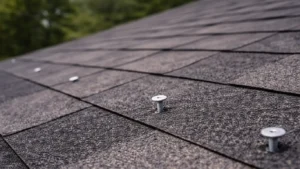
Nail pops occur when nails begin to push upward through the shingles. This can happen due to expansion and contraction of the roof structure or improper installation.
Rusting Nails
Older nails that are not corrosion-resistant may eventually rust. As the metal deteriorates, the nail can lose its ability to hold shingles securely.
Loose Fasteners
Over time, structural movement or weather exposure may cause fasteners to loosen, reducing their holding strength.
Professional Installation Matters
Because roofing nails affect the performance of every shingle on the roof, proper installation is essential.
Professional roofing crews follow manufacturer specifications for nail type, placement, and quantity to ensure the roof performs as intended.
Although these fasteners are small, they play a significant role in protecting the home from wind, rain, and weather.