When homeowners think about roofing, they usually picture shingles, flashing, or gutters. But beneath every roof covering is an important structural layer that many people never see: the roof decking.
Roof decking forms the foundation of the entire roofing system. It provides the surface that roofing materials attach to and helps distribute structural loads across the roof frame.
Because decking sits beneath the visible roofing materials, damage to this layer can sometimes go unnoticed until a roof replacement or major repair is underway.
Understanding how roof decking works can help homeowners better understand roofing inspections, repairs, and replacements.
What Is Roof Decking?
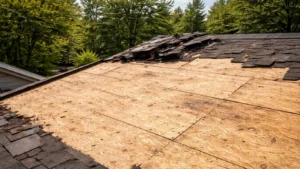
Roof decking is the structural surface installed over the roof’s framing system. It typically consists of large panels made from plywood or oriented strand board (OSB).
These panels are fastened to the rafters or trusses of the home and create a solid surface that supports the rest of the roofing system.
Once the decking is installed, additional roofing layers such as underlayment, ice and water shield, flashing, and shingles are added on top.
Common Materials Used for Roof Decking
Most modern residential homes use one of two primary materials for roof decking.
Plywood
Plywood decking is made from thin layers of wood veneer glued together in alternating directions. This cross-layer construction provides strength and durability.
Plywood has been used in roofing for decades and remains a reliable decking material.
OSB (Oriented Strand Board)
OSB decking is made from compressed wood strands bonded with adhesives. It is widely used in modern construction because it offers strong structural performance at a lower cost.
Most new homes today use OSB roof decking.
Why Roof Decking Is So Important
The roof decking plays several critical roles within a roofing system.
Structural Support
Decking helps distribute weight across the roof structure. This includes the weight of roofing materials, snow loads, and maintenance activity.
Attachment Surface
Roofing materials such as shingles must be securely fastened to a solid surface. Decking provides that surface and ensures fasteners hold properly.
Moisture Protection Layers
Underlayment and waterproofing membranes are installed directly over the roof decking. If the decking is damaged or uneven, it can affect the performance of these layers.
What Can Damage Roof Decking?
Although roof decking is protected by multiple roofing layers, it can still become damaged over time.
Common causes include:
- Long-term roof leaks
- Poor attic ventilation
- Ice dams and trapped moisture
- Improper roof installation
- Age and repeated weather exposure
When moisture enters the roofing system, it can eventually reach the decking and cause wood rot or structural weakening.
Signs of Decking Problems
Because roof decking is hidden beneath roofing materials, problems are not always easy to spot from the ground. However, certain warning signs may indicate potential issues.
- Sagging areas on the roof surface
- Soft spots when walking on the roof
- Persistent roof leaks
- Visible dips or uneven shingle lines
- Mold or moisture in the attic
If these signs appear, a roofing inspection can help determine whether the decking has been affected.
Decking Inspections During Roof Replacement
Roof decking is typically inspected when an old roof is removed during a replacement project.
Once the shingles and underlayment are stripped away, contractors can examine the decking directly. If damaged sections are found, those panels are removed and replaced before the new roofing system is installed.
This step ensures the new roof is installed on a solid and reliable foundation.
Partial Decking Replacement
In many cases, only small sections of decking require replacement. Areas around previous leaks or flashing failures are the most common locations where decking damage appears.
Replacing damaged panels during a roof installation helps prevent future structural or moisture issues.
Ventilation and Decking Health
Proper attic ventilation plays an important role in protecting roof decking.
When warm, moist air becomes trapped in the attic, condensation can form on the underside of the decking. Over time, this moisture can lead to mold growth or wood deterioration.
Balanced intake and exhaust ventilation systems help maintain airflow and keep the decking dry.
Why Decking Quality Matters for Roof Longevity
Even the highest-quality shingles cannot perform properly if they are installed on damaged or unstable decking.
A strong roof starts with a solid foundation. Ensuring the decking is in good condition allows the rest of the roofing system to function as intended.
This is one reason professional roofers include a full inspection of the decking layer before new materials are installed.