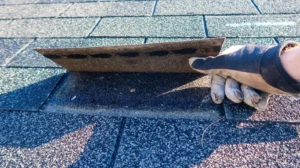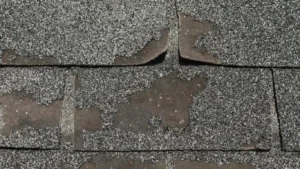
Asphalt shingles are designed to lay flat and create a continuous protective layer across the roof surface. Over time, however, some shingles may begin to curl upward at the edges or bend in the middle.
Curled shingles are one of the most visible signs that a roof may be aging or experiencing underlying issues. While minor curling can occur naturally as roofing materials age, more severe curling may indicate that the roof is deteriorating or approaching the end of its lifespan.
Understanding why shingles curl and what it means for the condition of your roof can help homeowners decide when repairs or replacement may be necessary.
What Is Shingle Curling?
Shingle curling occurs when the edges or middle of asphalt shingles begin to bend or lift away from the roof surface. Instead of lying flat, the shingles develop visible curves that change the shape of the roof covering.
There are two common forms of shingle curling:
- Cupping: The edges of the shingle curl upward while the center remains flat.
- Clawing: The middle of the shingle lifts while the edges remain attached to the roof.
Both conditions can weaken the roof’s ability to shed water and protect the structure beneath it.
Why Shingles Begin to Curl
Several factors can cause shingles to curl over time. In many cases, the issue develops gradually as roofing materials age and experience years of weather exposure.
Roof Aging
The most common reason shingles curl is simply age. Asphalt shingles contain oils that help keep them flexible. As the roof gets older, these oils slowly evaporate.
Once the shingles lose flexibility, they can begin to shrink, warp, or curl as they react to temperature changes and weather exposure.
Poor Roof Ventilation
Attic ventilation plays an important role in regulating roof temperature. When ventilation is inadequate, heat can become trapped beneath the roof deck.
Excessive attic heat can accelerate shingle deterioration and cause the roofing materials to age more quickly. Over time, this can lead to curling shingles.
Moisture Problems
Moisture trapped in the roofing system can also contribute to shingle distortion. If water vapor accumulates beneath the roof deck, it may cause roofing materials to expand or shift.
This moisture movement can gradually change the shape of shingles and lead to curling.
Improper Installation
If shingles are installed incorrectly, they may be more susceptible to curling later on. Problems such as improper fastening, poor ventilation planning, or incorrect shingle placement can shorten the life of a roof.
While installation issues may not appear immediately, they can lead to visible problems over time.
How Curling Shingles Affect Your Roof
When shingles curl, they no longer create a smooth surface for water to run off the roof. Instead, the lifted edges can catch wind and allow moisture to reach the layers beneath the shingles.
This can lead to several potential issues.
Increased Risk of Leaks
Curled shingles can allow rainwater to travel beneath the roofing material. Over time, this moisture can damage underlayment and roof decking.
Wind Damage
Shingles that are lifted or curled are more vulnerable to strong winds. Wind can catch the raised edges and tear shingles loose during storms.
Accelerated Roof Deterioration
Once shingles begin curling, the roof may continue deteriorating more quickly. Exposure to sunlight, wind, and rain can cause additional damage to already weakened materials.
Signs of Curling Shingles
From the ground, homeowners may be able to spot several indicators that shingles are beginning to curl.
- Shingle edges lifting upward
- Uneven or wavy sections of the roof
- Shingles that appear bent or warped
- Visible gaps between shingles
If these signs appear across multiple areas of the roof, it may indicate that the roofing system is aging.
Can Curling Shingles Be Repaired?
In some cases, isolated curling shingles may be repaired or replaced individually. However, if curling is widespread across the roof, repairs may only provide a temporary solution.
When many shingles are curling, it often means the roof has reached the later stages of its lifespan. At that point, roof replacement may be the most practical long-term solution.
How to Slow Shingle Deterioration
While curling shingles cannot always be prevented, proper roof maintenance can help extend the life of roofing materials.
- Maintain proper attic ventilation
- Address small roofing issues early
- Keep gutters clear to ensure proper drainage
- Inspect the roof after major storms
These steps help reduce the conditions that accelerate roof aging.