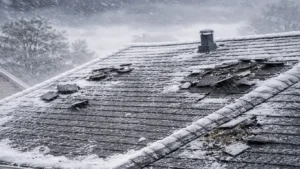
After a strong windstorm, it’s not uncommon for homeowners to notice pieces of roofing material in their yard or a patch of roof that suddenly looks different from the rest. Blown off shingles are one of the most common types of roof damage and can happen even during relatively short periods of severe weather.
While losing a few shingles might seem like a minor problem, those missing sections can expose the underlying layers of your roof to moisture and weather. Understanding why shingles blow off and how the problem is typically repaired can help homeowners respond quickly and protect their roof from further damage.
Why Shingles Blow Off in the First Place
Roof shingles are designed to withstand significant wind and weather exposure, but several factors can make them more vulnerable to lifting and detachment.
Wind pressure can create uplift along the edges of shingles, especially along roof ridges and corners where airflow is strongest. If the shingles are already weakened or improperly secured, that pressure can pull them loose.
Over time, adhesive seals between shingles can also degrade due to aging and temperature changes. Once that bond weakens, shingles become easier for wind to lift.
Several common conditions increase the likelihood of shingles blowing off during storms.
1. Strong Winds and Severe Weather
High winds are the most obvious cause of shingle loss. During storms, gusts can create powerful uplift forces that pull shingles upward from the roof surface.
Wind damage is more likely to occur on exposed areas of the roof such as ridgelines, roof edges, and corners where airflow is strongest. Even newer roofs can lose shingles if wind speeds exceed the rating of the roofing material.
2. Aging Roofing Materials
As asphalt shingles age, they gradually lose flexibility and become more brittle. Older shingles are less able to bend under wind pressure and are more likely to crack or detach entirely.
The adhesive strips that help hold shingles together can also weaken over time. When these seals fail, shingles can lift more easily during storms.
If a roof is approaching the end of its lifespan, shingle loss during wind events becomes increasingly common.
3. Improper Installation
Roof installation quality plays a major role in how well shingles resist wind. If shingles were not nailed properly during installation, they may not be securely attached to the roof deck.
Some installation issues that can increase the risk of shingle blow-off include:
- Nails placed too high on the shingle
- Too few fasteners used
- Nails driven at improper angles
- Incorrect shingle alignment
Even small installation mistakes can reduce a roof’s wind resistance significantly.
Fun fact: My very first roofing job was to fix an installation where every single nail was not set deep enough due to improperly setting the nail gun.
4. Poor Roof Ventilation
Ventilation problems inside the attic can also contribute to roofing issues over time. Excess heat buildup can cause shingles to age faster and weaken adhesive bonds.
When ventilation is inadequate, roofing materials may deteriorate earlier than expected, making them more susceptible to storm damage.
What Happens When Shingles Go Missing
Shingles serve as the outer protective layer of the roofing system. When they blow off, the layers beneath them become exposed to sunlight, rain, and wind.
If the underlying underlayment remains intact, the roof may still provide temporary protection. However, prolonged exposure to weather can quickly degrade those materials.
Without prompt repairs, missing shingles can allow water to enter the roofing system and eventually reach the attic or interior of the home.
How Roofers Repair Blown Off Shingles
The repair approach depends on the extent of the damage and the condition of the surrounding roof.
Replacing Individual Shingles
If only a few shingles are missing and the surrounding roofing materials are still in good condition, a contractor can usually replace the affected shingles individually.
This involves installing new shingles in the damaged area and securing them with proper fasteners and sealing strips. When done correctly, these repairs can restore the roof’s protective barrier.
Section Repairs
If wind damage affects a larger section of the roof, a contractor may need to remove and reinstall shingles across a broader area. This ensures the new shingles integrate properly with the existing roofing materials.
Section repairs are sometimes necessary when multiple rows of shingles have loosened or lifted.
Full Roof Replacement
In cases where shingle blow-off occurs across many parts of the roof, or when the roof is already nearing the end of its lifespan, a full replacement may be recommended instead of repeated repairs.
If shingles are frequently blowing off during storms, it may indicate that the roofing system as a whole is deteriorating.
When to Schedule a Roof Inspection
If you notice shingles on the ground or see bare patches on your roof after a storm, it’s best to have the roof inspected as soon as possible. Even if damage appears minor, additional shingles may have loosened or lifted in ways that are difficult to see from the ground.
A professional inspection can determine whether repairs are sufficient or if larger sections of the roof have been compromised.
Preventing Future Shingle Loss
While severe storms can’t always be avoided, certain steps can help reduce the risk of shingles blowing off.
- Ensuring shingles are installed according to manufacturer specifications
- Maintaining proper attic ventilation
- Replacing aging roofing materials before they deteriorate too far
- Inspecting the roof periodically after major storms
Proactive maintenance can help homeowners catch potential problems early and improve the roof’s ability to withstand future weather events.